Key Takeaways
- Hip preservation and hip replacement are not two stages of the same problem. They are different treatment philosophies suited to different patients.
- Age, activity level, and the amount of existing joint damage are the main factors that point toward one path or the other.
- Hip preservation aims to correct structural problems and protect the natural joint, while replacement addresses a joint that has already broken down.
- Many patients benefit from a hip preservation procedure that delays or entirely avoids the need for replacement later in life.
- Dr. John Redmond is a Mayo Clinic-trained hip specialist who evaluates each patient's imaging, age, and goals individually to determine the right path for each patient at his Jacksonville, Florida practice. Request an appointment with Dr. Redmond to discuss which approach fits your hip condition.
Two Different Goals for Two Different Situations
When patients hear 'hip surgery,' they often assume it means replacement. In reality, hip preservation and hip replacement serve very different purposes and are appropriate for very different patients.
Hip preservation surgery is designed to correct structural problems inside the joint, such as abnormal bone shape or a shallow socket, before that damage progresses to irreversible arthritis. Hip replacement, on the other hand, is used once the joint has already deteriorated to the point where the natural cartilage can no longer function.
Conditions That Point Toward Hip Preservation
Hip preservation is typically considered for younger, more active patients whose pain stems from a specific structural issue rather than widespread joint degeneration. Common conditions include:
- Femoroacetabular impingement (FAI): Extra bone growth on the ball or socket of the hip causes abnormal contact between the two during movement, which can damage cartilage and the labrum over time if left untreated. (AAOS)
- Labral tears: The ring of cartilage that seals the hip socket can tear, often in connection with FAI or hip dysplasia.
- Hip dysplasia: A hip socket that does not fully cover the ball of the joint, leading to abnormal stress on the cartilage over time.
Many of these conditions can be addressed through hip arthroscopy, a minimally invasive approach using small incisions. More significant structural problems, such as advanced dysplasia, may require an open procedure called a periacetabular osteotomy (PAO) to reposition the socket.
Conditions That Point Toward Hip Replacement
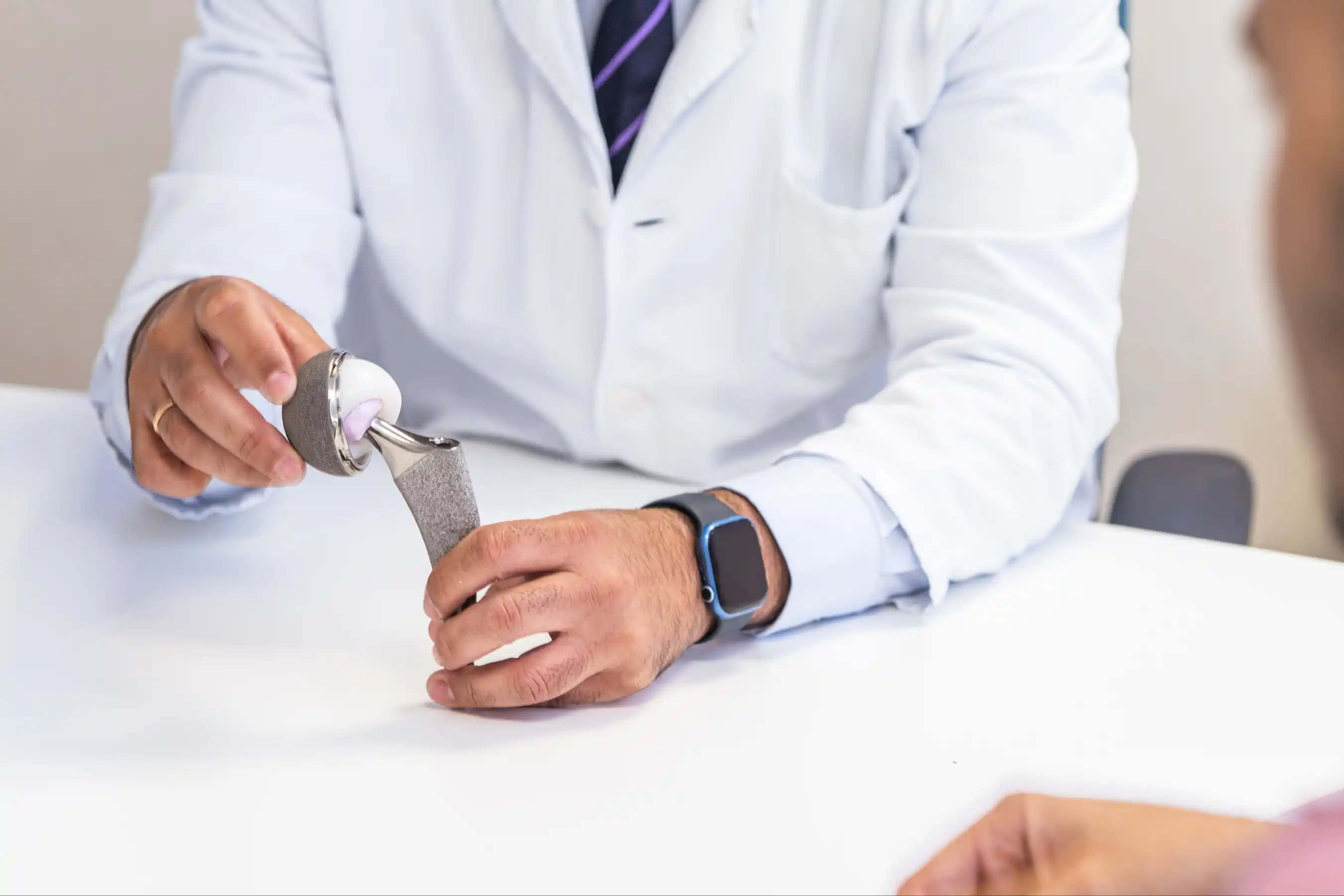
Hip replacement becomes the more appropriate option once the joint has sustained significant, often irreversible damage. This is generally the case with:
- Osteoarthritis: Gradual breakdown of cartilage leading to bone-on-bone pain and stiffness
- Rheumatoid arthritis: An autoimmune condition causing chronic joint inflammation and cartilage loss
- Advanced avascular necrosis: Significant loss of blood supply to the femoral head resulting in bone collapse
- Traumatic arthritis: Joint damage following a significant hip fracture or injury
Comparing the Two Approaches
| Hip Preservation | Hip Replacement | |
|---|---|---|
| Typical patient | Younger, active, structural problem | Joint already significantly damaged |
| Goal | Protect and preserve the natural joint | Replace damaged joint surfaces |
| Common conditions treated | FAI, labral tears, hip dysplasia | Osteoarthritis, advanced avascular necrosis |
| Approach | Arthroscopic or open, depending on severity | Direct anterior hip replacement |
| Long-term outlook | May delay or avoid replacement | Long-term, durable solution for advanced damage |
Questions to Ask During a Hip Evaluation
Understanding your own case starts with the right conversation. Patients evaluating their hip pain with Dr. Redmond can expect a discussion that covers:
- What is actually causing the pain, based on imaging and physical exam findings
- Whether the joint's cartilage is still largely intact or has already broken down
- How age and activity goals factor into the recommended approach
- What realistic outcomes look like for each option, including recovery time
Dr. Redmond has extensive fellowship training in both hip preservation and hip replacement, including more than 4,000 anterior hip replacements performed, giving patients an honest evaluation of which path truly fits their situation rather than a one-size-fits-all recommendation.
Get a Clear Answer About Your Hip Pain
Hip pain does not have a single answer, and the right treatment depends entirely on what is actually happening inside the joint. Dr. Redmond takes the time to evaluate each patient's imaging, age, and activity level before recommending hip preservation or hip replacement.
If you are trying to understand your own hip condition before deciding on a path forward, schedule a consultation with Dr. Redmond to get an honest assessment specific to your hip.
Frequently Asked Questions
Can hip preservation surgery prevent the need for hip replacement?
In many cases, yes. Treating conditions like FAI and hip dysplasia before they progress to significant cartilage damage can reduce the risk of early-onset arthritis and delay or avoid the need for replacement altogether. Results depend on the severity of the condition at the time of treatment.
At what age is hip replacement typically recommended over preservation?
There is no strict age cutoff, but hip preservation is generally reserved for younger, active patients with a structural problem and largely intact cartilage. Hip replacement becomes the more appropriate option once cartilage damage is advanced, regardless of age, since a damaged joint cannot be structurally preserved.
Is hip preservation surgery less invasive than hip replacement?
It depends on the specific procedure. Many hip preservation surgeries, including treatment for FAI and labral tears, can be performed arthroscopically through small incisions. More complex structural problems, like significant hip dysplasia, may require a more involved open procedure. Hip replacement is a more extensive surgery overall, since it involves replacing the joint surfaces.
How do I find a hip preservation specialist near me in Jacksonville?
Dr. Redmond's practice has two convenient office locations in Jacksonville, Florida, serving the Southside and Beaches areas. You can request an appointment online at any time, and the team will follow up promptly to confirm your visit.
